Showing posts with label Teaching History. Show all posts

Thursday, April 6, 2017

Tweeting the Cuban Missile Crisis

Twitter is a great way to increase communication in the classroom. There are many ways to useTwitter to increase communication with students, parents/guardians, the community, and the world at large. In particular, I like that students can follow experts in the field. That's so powerful.

Recently, I used Twitter in a different way. We Tweeted the Cuban Missile Crisis. During class, we studied the Cuban Missile Crisis and watched large portions of the film, 13 Days, which dramatized the two weeks in 1962 where the USA and USSR teetered at the brink of war.

I tasked students to impersonate an important character from the Cuban Missile Crisis and Tweet as if in real time (though in 6 not 13 days). I also assigned myself a role in the class as I too tweeted from the perspective of the NYT.

It worked! I'm always worried about trying new things, but it really worked! Take a look at the Twitter thread.

Things that make me happy:

  1. Using Twitter extended the conversation beyond the classroom. Most of the tweeting was done outside of class period. Check out some of the back and forth.
  2. The simulation asked students to play the role of expert. It is always good to ask students to play expert. It was clear to me that most students did outside research to keep the conversation going.
  3. They were writing to an audience bigger than just the teacher.
  4. It's hard to hide. Kids have to participate. 
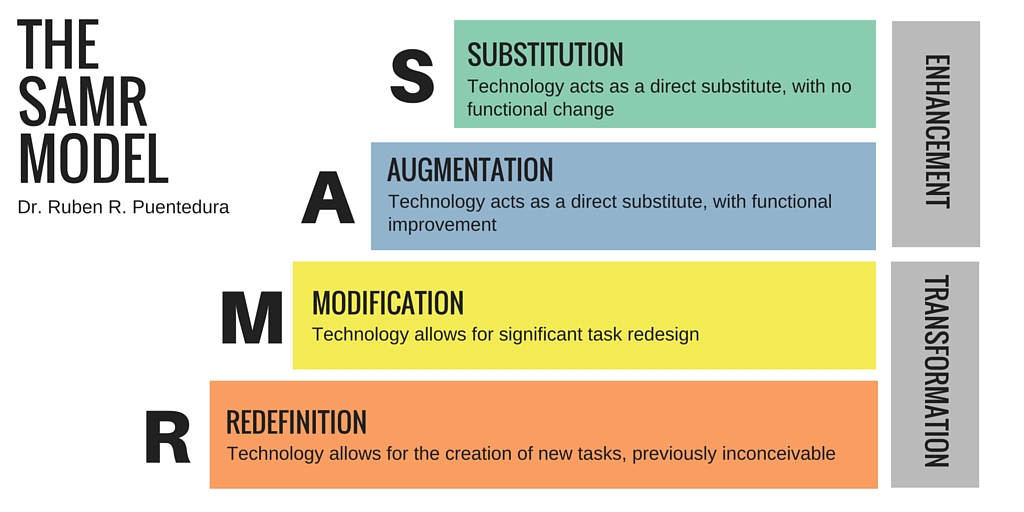
  5. In Puentedera's SAMR model this entire activity fell firmly in the redefinition category. We did something that was previously inconceivable. 
If you want to do this too, respond to this post on Google+ and I'll help you get set up. 

Wednesday, July 6, 2016

Risk and Failure

We say we admire risk-takers. Maybe that's true, but we do little to cultivate them in schools because we punish failure.  AJ Juliani, one of my favorite bloggers and ed-tech writers, has written some posts celebrating failure. I love, love the idea of doing this. His class mantra is, "Sometimes you win, sometimes you learn." (I'm stealing that one for my class.)
https://www.flickr.com/photos/amboo213/4020584983
There are so many sayings, cliches, and truisms about learning from failure. A quick google search finds gems such as:
  • “Success is most often achieved by those who don’t know that failure is inevitable.”                                                                                                                         - Coco Chanel   
  • “Only those who dare to fail greatly can ever achieve greatly.”                                                                                                           -Robert F. Kennedy                                and this wouldn't be an ed-tech blog without a  Ken Robinson quote: 
  • “If you’re not prepared to be wrong, you’ll never come up with anything original.” 

Any honest self-assessment of schooling must lead us to the conclusion that we do not encourage risk-taking in schools. Failure is uniformly seen as bad. We either equate failure with lack of effort or we refuse to acknowledge the difference between them. A great teacher of mine, +Russ Walsh, used to talk about this in relation to the downsides of grading student writing. He posited that if we were going to punish kids (take away points/ give lower grades) for misspellings and grammar mistakes then our students were going to write a lot more safe (and boring) stories about big dogs than riskier stories about enormous pterodactyls. By punishing risk-taking and rewarding playing it safe we create kids who are risk-averse. I'd extend this argument to suggest that most school practices create kids who are risk averse. As long as we punish kids for mistakes (and don't say we aren't punishing them) this will remain true. Go ahead, take a risk! But risk a poor grade. It's a game only a rebel or sucker would play.

Next year, I will be teaching 12th graders, most of whom are very used to and very good at the traditional rules of the game and who have been trained to be risk averse and who are desperately worried about getting into college. I plan to incorporate some genius hour/ 20% time in the course. I will want to celebrate spectacular failure. I will want kids to aim high and think big. And when it doesn't work out, I will want them consider how to do it better next time. I hope I can pull it off, but if not I will remind myself that sometimes you win and sometimes you learn. 

In the spirit of solidarity, I will also acknowledge and reflect upon my failures publicly with the students. This is going to be a very different kind of high school history course. It is my first time teaching it. 

This will be a big paradigm shift for me as well. I like being successful. I'll let you know how it goes. 

Wednesday, May 18, 2016

Starting Late and Starting New

    I'm late to the tech party. I was somewhat of a skeptic of the big promises of tech 2.0.  For instance,  I used to think podcasts were silly. Who's listening to them? "What's the big deal? To me, it was akin to the proverbial tree falling in a forest.
    Flipping the classroom was something about which I was also skeptical. I saw its merits. But for me, it really came (and still comes) down to what was being flipped? If content was still about recall and regurgitation, it matters little to me if students did this at home or in school. "So, what's the big deal?" I thought.
    To be fully candid, I was never a tech Luddite. I saw utility in some aspects of technology. Since I've never thought that "coverage" was particularly important, the fact that knowledge was a click away strengthened to my response to people who suggested that kids need to "know" certain facts. Still, I've been teaching a long time. This is my 25th year teaching and it wasn't until these last three years that I've become a tech enthusiast.
   The most obvious catalyst is that my school went 1 to 1. Yet, I do not think I would have adopted technology as fully if I also wasn't in the midst of a mid-career change. For at the same time my school went 1-1, I started to teach elementary school after two decades of teaching mostly 8th graders. Brand new kids, brand new school, brand new age group, brand new discipline. I was starting from scratch. I didn't have years of good stuff to get rid of. We all have those lessons, those greatest hits, that we roll out every year. They were all gone. Tabula rasa, baby. Since I had no legacy lessons, I was truly able to start from scratch and rethink my approach.
    I have now moved to teaching high schoolers. In my department, we have worked on revamping a 15-year-old curriculum that is near and dear to its creators' hearts. It is so much harder to change! People care deeply about courses they've honed over years. This course and courses were created before technology really was ubiquitous in the classroom. I am beginning to wonder if we need to start afresh if we ever want to truly leverage tech in our classrooms. I am beginning to feel that tinkering around the edges of classes that were envisioned, created and structured prior to tech will never get us there.


Tuesday, March 1, 2016

Religion, Reformation and Relevance- Teaching Luther and a Class Activity using Tech 2.0.

So... I'm teaching the Protestant Reformation to a 9th graders in our Religions and Revolutions World History Class. Did you know this is the 500th anniversary of that event? More than 2/3rd of my students are not Christian (or are Christian in that Santa Claus comes at Christmas). Only five students in my class indentify as practicing Christians. Three are Protestant. Names like Calvin, Luther, Zwingli and Menno mean little to nothing at all to most of my students. Yet, the Reformation sparked a revolution that is felt (for better and for worse right down to this day). To most of these students, the past is irrelevant.

How to make this seem important? I tried to put my students in Luther's shoes. I pointed out the roots of the words Protestant Reformation. I wanted to tie his protest and reform to issues students care strongly about today.

So, after studying about Luther and his reforms I created a Google Presentation via Slides. Each student was assigned a blank slide. On the slide they had to pick a contemporary issue they wanted to protest and then reform and explain why. I then posted the presentation on the class blog. Students then had to respond to at least two other students' posts.

I liked the activity. It wasn't a game-changer. I've given better lessons and I have used technology in more creative ways. But I liked the collaborative aspect of this. I like that we have a digital artifact. Finally, my hope was to make Luther's protest seem more real.

Here is what my students came up with:

Featured Post

Prezi Video

 Remember Prezi? Once upon a time it was all rage for students. I see very few students use this tool any longer. Prezi is back, though, wit...