Friday, December 2, 2016

One Wish for Google Classroom

I'm really liking the flexibility of Google Classroom. It is a very effective and intuitive blended learning tool. I wish it had an umbrella page for students so they could see all of their work at a glance. Perhaps they could somehow add a Google Calendar link or have assignments save automatically to Google Calendar but have it viewed within Classroom. I know that Google says that Classroom isn't going to be a full LMS, that this is not their vision for it.

Folks at my school are kicking around the idea that it replace our use of our current school information system to give and receive assignments. Students would miss their current ability to see all of their assignments at a glance.

To anyone whose school uses Google Classroom as its sole tool for announcements and assignments, what system have you put in place so that students can see all their work at a glance?

update in response to comment from Kyle B.
I should be more clear. I forgot a crucial clarification in my haste. I am aware that I can save my assignments to Calendar, but student have to go to calendar. I'm looking for more of a one stop shopping experience within Classroom.


Wednesday, November 30, 2016

On PLNs and small victories

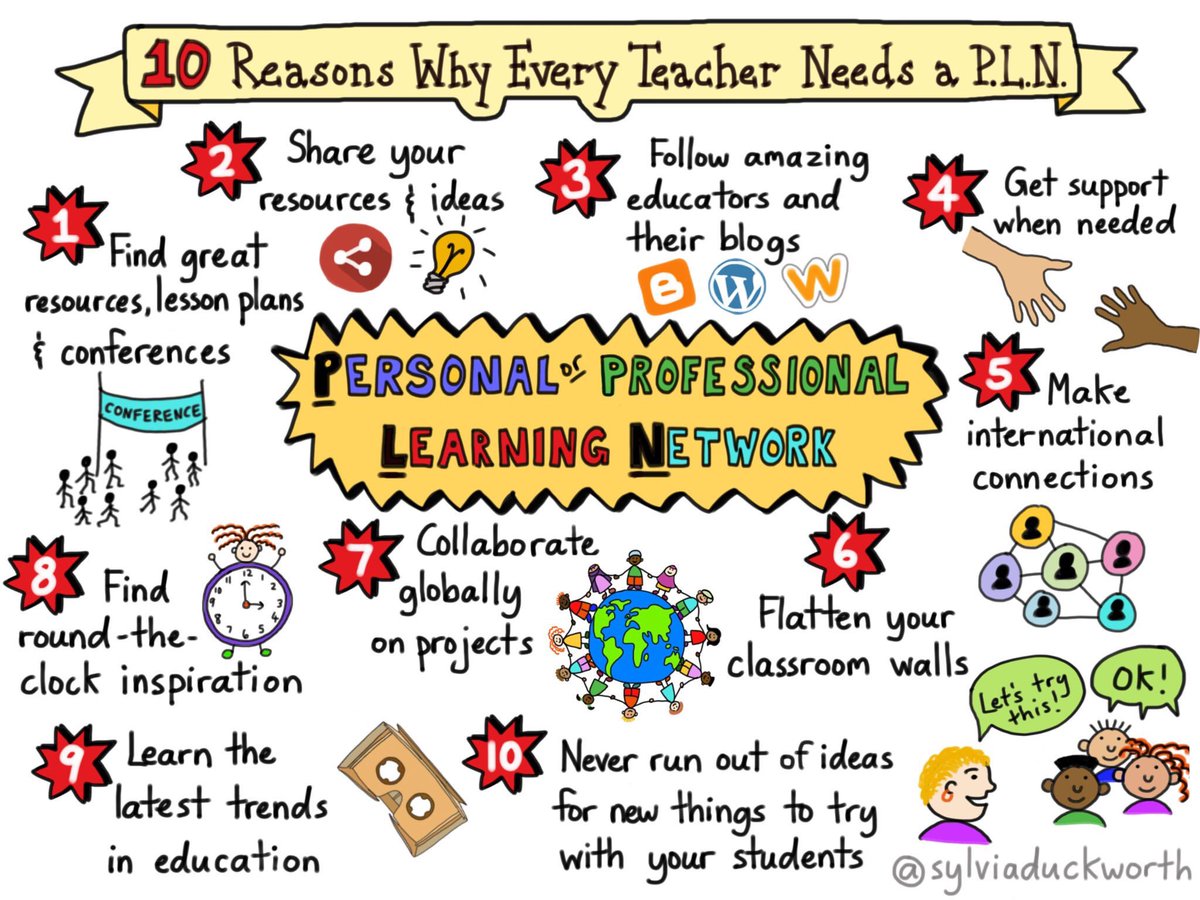
I like small victories. Today I had one because of my PLN (Professional Learning Network). One of my regular reads is Matt Bergman's Learn Lead Grow blog. I follow him through Google+. His post today was about a cool chrome extension to help those with dyslexia better read their chrome browser.

After reading his blog, I went right to the support services team at school and shared this chrome tool and then showed them how to access it themselves via chrome extensions. A cool side benefit is that I also showed these folks the cool world of Chrome add-ons and extensions. Because of Matt's blog and my PLN, the learning and reading specialist, the head of support services, and the ESL teacher all now can share with their students this effective tool. I was pleased to hear the reading specialist explain to me why she thinks the extension is a useful tool for those who have dyslexia.

Yesterday, AJ Juliani shared his reading list. Though my list is not as vast as his, here are some of the people and sites that I read almost daily.

  1. AJ Juliani - A great big-picture and inspirational tech though leader. For AJ, it is always about the bigger questions. It isn't really about the tech, it is about what tech allows us to do. 
  2. Learn, Lead, Grow - Matt Bergman is a thoughtful tech innovator. 
  3. Jordan Shapiro at Forbes magazine always offers provocative articles about education and education policy. 
  4. +Alice Keeler- a true Google guru. What doesn't she know how to do? I can't keep up with her output. But she is amazing. 
  5. Finally, I check out this Education Technology and Mobile Learning blog for its broad array of tips and tools.  
This list is not exhaustive. I also contribute to and read Google+ posts. +Kyle Beatty and +Dan Crowley are terrific aggregators of fascinating tech and ed-tech information. Their commentaries on are always interesting and well considered. I tweet and receive a steady stream of education and ed-tech tweets as well. These are crucial components of my PLN.
https://pbs.twimg.com/media/CkswcFeW0AAGg1Y.jpg
Important people who used to be part of my PLN

I don't read him too much anymore, but Will Richardson helped me connect technology to my already very progressive pedagogy. Before Will, I thought tech useful, but didn't really see its potential transformative power. His blog that I used to read no longer exists. Currently, I follow him on Medium and am happy when his work pops up on that aptly named medium. 

Lea Hansen was likely my first daily read. I don't check her out much anymore, but her classroom blog was a tremendous inspiration to me back when I was a social studies teacher five and six years ago. 

I also found Jennifer Ward's work to be amazing. She barely posts anymore, but thanks Jennifer. You taught me a lot. 

I also read quite a few history teaching sites that I don't list here. Though they are tech related, they are less germane to this general ed-tech blog. Unlike the folks I list above, I don't read them daily. They are bookmarked sites I visit frequently, but they aren't part of my PLN.

To my about 50 or so daily readers (and thanks so much to all of you!) I am sure that I am preaching to the choir in saying get a PLN. If you somehow have come across me, surely some of the names I mention above are already very familiar to you. If not, I hope you find them as interesting as I do. 

I love my PLN. I almost wish the unwieldy immersion into learning it offers could be accredited because I've learned more from it than I did through my Master's degree. I learned something today that wasn't earth-shattering. But I made three teachers very excited today and their new knowledge will directly benefit students right away. Without my PLN, this small victory would not have happened.

Please retweet this along with your favorite reads.


Tech Tip of the Day... actually a complaint and then a solution.

The Google graveyard is littered with some of my favorite tools. Sigh, I miss you Google Research Tool. And double sigh, I really really miss you Google Hangouts on Air. Today, I found its replacement. Ultimately, it did work. really, it isn't too different from the way it use to work. One use to access it from Google+. Now you get to it through YouTube.

From Google, here is how
"Follow these steps to set up Hangouts On Air with YouTube Live:
  1. Go to Live Streaming Events in Creator Studio.
  1. Click New live event.
  1. Select Quick (using Google Hangouts On Air).
  1. Give your live stream a title.
  1. Click Go live now or enter in details to schedule your event for later.
  1. Use Hangouts to broadcast live."

It works. It isn't as easy as it used to be. I don't know why they changed it. Sadly, for my 121 iPad school, it doesn't work on an iPad. One can't create a recorded hangout or join one either. Also, kudos and thanks to my colleague at FCIT, +Victoria Schwoebel. I needed her help figuring it out. Which shows two things:
    1) It isn't that easy to figure out because I am not a tech neophyte.
          and
     2) Vicki is very smart.

I want my students to record interviews on their iPads. Sadly, this isn't going to be the tool.


Tuesday, November 29, 2016

20% Time

Thanks to +A.J. Juliani for his weekly newsletter and insights into 20% time. I am well underway into 20% time with my class of 11th and 12th graders. 20% time was inspired by Sergey Brin's time in Montessori school. It no longer quite exists at Google, but the idea is/ was that Google's workers would spend 1/5th of their time working on their own projects, not the projects assigned to them. In Google's earlier days (according to this infographic) half of Google's products came from 20% time.

It has taken a lot of prep work to get ready. I've brought in 4 speakers to prime the idea pump. I have told the students loudly and clearly that for 20% time they are only responsible for the effort, not the results. Failure is an option because if they don't risk failure they won't aim high. I conferenced with every student after they wrote me their project proposals to help give their ideas some focus.

So that I stay abreast of their work and their successes and pitfalls, I created this log for the project (which I stole from +Colin Angevine's comp sci class.) I will also have the students journal weekly in addition to the nightly log posts.

So far so good, I like very much that I am modeling risk-taking. I like that I've already convinced a few skeptics that this could be really cool and powerful way of thinking about learning. As I told the students, failure is an option. This really might not work. But I'm pleased with the start. We will work on it in earnest for the next three weeks of school. All  students seem to have a good kernel of an idea
and most seem off to a good start.

Tuesday, November 22, 2016

Blended Learning Resources

Blended learning and flipped learning are commonly heard terms these days. Khan Academy is likely the most famous of the blended learning sites. Some blended learning programs are so tech centered that individual student work is assigned by a computer program which customizes work based on student performance.

For most of us, blended learning means we combine the internet and digital media with traditional classroom methods. Flipped learning is closely related. In flipped learning, direct instruction is provided at home via videos, tutorials and other digital media and the practice and individualized instruction is provided at school by the teacher.

Its promise is oversold. I like it for what it is. But it is less transformative than appears at first glance. I like that teachers can customize lessons. Yet, it is labor intensive and takes a lot more work than traditional instructional methods. I do like that students can rewatch the lecture or video. I also like that students can see and practice the problem set again and again. Blended learning still posits the teacher as expert and leaves little room for problem and project based learning.

Though its promise is oversold, it still should absolutely be in the "toolbox" of a tech savvy teacher. Blended learning has a purpose and is effective by its own terms. Take a look at some of the blended learning ideas I shared with faculty members today. Not on the padlet presentation is the chrome extension edPuzzle. It is a must get for YouTube.


Made with Padlet

Friday, November 18, 2016

Visual Essay Assignment Example/ ISTE standards


I recently assigned a project I called a "visual essay" in my International Relations course. I asked students to create a four to five minute long visual essay that considered at least two important works related to Samuel Huntington's, Clash of Civilizations thesis. Half of the presentation was to be a review his idea and two responses to it. The second half of the presentation was to consider how well his 25 year-old thesis is holding up in 2016. Looking at the world today, students were to consider if Huntington or his critics are correct. I asked them to give real world examples to support their arguments. .

I showed students three new (to them) tech tools:  adobe spark and these two RSA tools. In perhaps my favorite presentation, these two boys used the old standby iMovie to make a very effective visual essay.

I very much like this open note, open tool, open everything assignment. It requires students to analyze, apply, evaluate and synthesize information. I also like that students have a choice in digital tools. Not all my ideas are base hits. Sometimes I strike out. Sometimes I hit a weak grounder to second base. This one is at least a solid hit for extra bases. What I like best about it is that I am not giving a test asking "what" questions. This assignment gets to the same type of thinking that a good essay promotes.

What's the value add in using tech?  I believe, or I agree with ISTE, that students should: "a. interact, collaborate and publish with peers, experts, or others employing a variety of digital environments and media" and "b. communicate information and ideas effectively to multiple audiences using a variety of media and formula."  At some point, being "educated" will include the expectation that one is facile with multi-media presentation tools. We are very close to that point. Some say we have already reached it.


Wednesday, November 16, 2016

Success and 20% Time

I was cautioned (rightly so) by my boss to be careful of social media use. I made a boneheaded mistake and retweeted without checking the hashtag. So, I write very carefully here even though what I'll say has political overtones and implications.

For many reasons, we need to redefine what it means to be "successful" in this post-modern, post-industrial society. One can be a failure at many things yet deemed successful if one has made enough money. That's sick for society. Its effects are all around us. It is also toxic to individuals. If one seeks money and power to define success, one will likely never have enough.

I teach in a high-powered prep school. We promise a "both-and" for our students and their parents. We promise a path to prestigious colleges paving the way to "success" while also promising to nurture the social, emotional and spiritual welfare of our students. I'm a proud parent of 5 kids who go to my school. I think we do a very good job. I also know that if we didn't promise a path to "success" as traditionally defined, we'd go out of business. Besides,  nothing is wrong with money. I'd certainly like to have more of it.

But here is my fear.
How many of my teenaged students will, when they reach my age, wake up wondering if they've wasted half their lives chasing a phantom. Many will have done well enough in high school to get into a very good college, have done well enough  in college to get that plum internship that in turn will have led to law-school, med school, business school, etc... eventually landing some of them in prestigious firms, hospitals, and businesses.

I suspect many will wake up and wonder if it has all been worth it, "Is this all there is?" Most of them will not the top in their fields. Only a few will land the "best" positions.

I think a mid-life crisis is a very real thing to many people. One reason they occur is because people define success too narrowly and they are disappointed after spending decades working for something to only find it an empty promise.

In an increasingly atomized, individualized, and automated society, fewer and fewer people will be able to meet success. Much of the anger Donald Trump successfully channelled was of people who have had the rules changed on them. The old paths to success aren't working. I fear they will work even less in the future. We can't afford a permanently angry group of older middle aged folks and I fear we are stuck with several generations of folks who are going to stay angry. Additionally, generations before us had family structures to support them. This is far less true today, as conservative author Ross Douthat explains.

"Be a success." "Work hard and get ahead." This is a seductive and powerful narrative. I'm a teacher. I chose a career where I knew my earning power was limited, yet I too have sometimes thought of myself as less successful than schoolmates who've earned far more than me. I reject that notion intellectually, but I still feel it even though I know better. How does the person feel who doesn't know better?

We need a better way. Desperately.

In my own small way, I am hoping my students see that they can define success differently through their work on my 20% project (which I learned about through +A.J. Juliani) I've had a series of activists come through and talk to my students about issues about which they passionately care. These activists have chosen less than lucrative career paths. Yet, they live fulfilled, meaningful and, dare I say it, successful lives. I thank +Phyllis Hanson, +Harvey Zendt and +Paul Paz y Mino for demonstrating this to my students.


Featured Post

Prezi Video

 Remember Prezi? Once upon a time it was all rage for students. I see very few students use this tool any longer. Prezi is back, though, wit...