Wednesday, January 4, 2017

What Are We Doing? Why Are We Doing It?

As a kid, I used to like making dioramas. "Mom, do we have any shoeboxes?" I'd swear that's why we kept them, the inevitable diorama project. Mine were never better than okay. I am not totally inept artistically, but I'm not great either. I remember a college art professor comparing my rather basic work with the more polished work of peers. He told me I had an "interesting aesthetic". Digression aside, I liked making dioramas because it didn't matter if I didn't finish the book! Usually the book jacket/ back cover was enough to make one.

I read tech blogs, articles and websites for at least ten hours a week. Many apps and tools are highlighted. Many are really impressive looking. Yet, I find myself asking, "Where's the beef?" about more than a few of them. What is the depth of knowledge (DOK)? What are high tech equivalents of diorama making? Look, if a kid wants to use a neat app to make a cool looking project, that's great. But before we insist that our students use iMotion or Telligami, please think very carefully about what learning we are asking for. Please.

Look, don't get me wrong. I am not a fan of "rigor". I maintain that less is often indeed more. I encourage teachers to slow down and cover less content in favor of deeper learning. There is also a  time component to consider. That's when I get a little bit leery of the Maker Movement of which I consider myself a fan. I love the design thinking that it promotes. Still, when students take weeks in the execution of a project or allow the 3-D printer and laser cutter to do most of the work, I wonder if we have milked the learning out of the assignment long before it is actually completed.

Here's another example of "all sizzle and no steak".  For many years I taught 8th grade social studies and I had my students make a Year in Review project. (I hadn't touched that document since 2012 until just now!)  I remember that a student used iMovie's trailer feature around 2008 or 2009 to make an amazing looking video that I now know required very little effort. As a relative tech neophyte at the time, I was bamboozled by the wow factor. (By the way, the best Year in Review project I ever received was a punk rock song about 1999. A student named Jon G. brought in his amp, guitar and played a brilliant, sad, funny and evocative song. I wish we had digital technology back then. He made me a cassette tape of it that I lost long ago.)

Sometimes what folks highlight as tech successes in the classroom don't do much to advance learning. I won't mention any names or websites here, but I am talking about some reputable and well received sites. Look, I am not dismissing these tech uses out of hand. There are some important"soft" skills such as attention to detail, and "stick-to-it-tiveness" that a well done stop- motion video requires. If well done, a student will also have had to use academic skills to make a story-board.  I also recognize that if tech use helps the kids become more excited about learning, that's a great thing, and that it is worth spending extra time.  But please always be mindful of the larger goal of learning. Don't make 21st century versions of my dioramas.
 

Sunday, December 25, 2016

Happy Holidays

These are a few of my favorite things.
Google extensions- oh so many of them. I've written more than a few blog posts about some of my favorites.
Google Keep- my new notes tool
Acer Chromebooks
20% Time
AJ Juliani's Mars Project
Flipboard app as curation tool
Google Cultural Institute- here's a link to its umbrella site.
https://www.google.com/culturalinstitute/beta/

On a more serious note, I'm more grateful than ever for a job that has meaning and purpose. I'm hopeful that we'll be in a better place 10 years from now because of our young people. I'm excited by the possibilities that tech affords us to make the world a better place.

I have my worries about the future, too. I'm not a Pollyanna. But today, especially on this holy day for me, I choose to live in faith and not in fear. May your Christmas, Hanukkah, Kwanza, and New Years be blessed.


Tuesday, December 13, 2016

Fake News

A quick Google search about a recent Stanford study gives you the following:

Can You Tell Fake News From Real? Study Finds Students Have ...www.npr.org/.../study-finds-students-have-dismaying-inability-to-tell-fake-news-from...Nov 23, 2016 - Students Have 'Dismaying' Inability To Tell Fake News From Real, Study Finds. Facebook ... If the children are the future, the future might be very ill-informed. ... Most middle school students can't tell native ads from articles.
Column: Most teens can't tell fake from real news | PBS NewsHourwww.pbs.org/newshour/updates/column-students-cant-google-way-truth/25 mins ago - The pizzeria vowed on Monday to stay open despite a shooting incident sparked by a fake news report that it was fronting a child sex ring run ...Why We Shouldn't Be Surprised Kids Can't Tell Fake News From Real ...https://www.good.is/articles/no-surprise-kids-fake-news-real-newsNov 30, 2016 - “It's a question of how do you decide what's good enough evidence to support a conclusion,” says Abraham P. Schwab, associate professor of ...Most Students Don't Know When News Is Fake, Stanford Study Finds ...www.wsj.com/.../most-students-dont-know-when-news-is-fake-stanford-study-finds-147...Nov 21, 2016 - Does children's digital fluency allow them to distinguish between fake news and real news online? WSJ's Sue Shellenbarger has the surprising ...
Thanks Google...


The study tells us that, “when it comes to evaluating information that flows through social media channels,” today’s “digital natives,” despite being immersed in these environments, “are easily duped” . In fairness to the digital natives, digital immigrants are equally fooled. 

Donald Trump's recent election reminds us that many older Americans were convinced Obama wanted to take away their guns, that he wanted to impose "death panels" to kill grandma, and that he wasn't born in the USA. In my personal opinion, sites like Facebook skirted their responsibility ny not removing fake news from their news feeds. There a plenty of people who really believed this nonsense.

This article shows us that in the final  months of the  campaign fake news sites received more hits than the top stories from traditional sources like the New York Times and the Washington Post!

(an aside, I've long been a proponent of "net neutrality". I wonder if I've been wrong.) 

All of this screams for the teaching of digital literacy! Look right now, it is easy to blame the right with its Fox News, etc.. But there could come a day when the left could indeed do the same thing. I don't know the ins and outs of Venezuela, but I know that Hugo Chavez manipulated the media (he was a radio host) to seize power and fundamentally ruin his country. 

The days of Walter Cronkite (who?) telling us what is news, what is real, and what should worry us are so long ago in the past. But our democracy and all democracies require an informed public. We can and should disagree about what to do about problems. However, we shouldn't be entitled to our own facts. 

So, do we teach kids how to think critically about their media consumption? How should people know what is legitimate news and websites? We need to foster meta-cognitive skills and thinking. We need to create aware and awake people who don't let themselves get duped. We can't just keep doing what we're doing. Our democracy and way of life depends on it. 

This recent article says it better than I can.

Monday, December 12, 2016

Citations on iPad using Chrome Explore feature.


I'm rather novice at Explain Everything, the tool I used to make this. But I'm excited to share this great new feature on the Chrome browser and I'm thrilled that it works on the iPad!

This is one of those times where tech just makes everything easier and better. (Unless you think it is important that kids memorize citation formats- which I don't. )


Thursday, December 8, 2016

The Kids are Distracted !

A common complaint we hear from teachers in schools where kids have computers and iPads is that the students are distracted and that they can't attend to their lessons. I see this myself as today in my student centered classroom I had to redirect a student from his fantasy football website and later from a political blog. However, remember that kids have long been distracted in class. More importantly, we have to ask, "How are we using the technology?"

Last year, my boss asked me to generate questions for an upcoming discussion at faculty in-service regarding distraction in students. Below is her question and my response. (I came across this today as I was cleaning out my inbox.)

AlexAs  a teacher that uses the iPads in your classroom quite a bit, can you offer a guiding question or two for small group discussions during our PD Day Friday on distraction in the classroom? Thank you! -K
K-
Your request is hard to distill into a question. But I'll try after a bit of explanation. With the tools in kids' hands, we can't expect them to attend the same way. Ever try not watching TV when it is on in a restaurant? I can't help but watch, even when I don't want to. My point is that we can't teach the same way as we used to. The beauty of the iPad though, is it can let us be more kid-centered in our teaching.... Since I still have to pose a question... it is this:
What do we want kids to know and be able to do?
Is she paying attention?

Follow up question:  Are we changing our expectations and goals in light of the fact that we have these powerful tools?  -Alex
Distraction is real. So is the potential for teaching differently.


Friday, December 2, 2016

One Wish for Google Classroom

I'm really liking the flexibility of Google Classroom. It is a very effective and intuitive blended learning tool. I wish it had an umbrella page for students so they could see all of their work at a glance. Perhaps they could somehow add a Google Calendar link or have assignments save automatically to Google Calendar but have it viewed within Classroom. I know that Google says that Classroom isn't going to be a full LMS, that this is not their vision for it.

Folks at my school are kicking around the idea that it replace our use of our current school information system to give and receive assignments. Students would miss their current ability to see all of their assignments at a glance.

To anyone whose school uses Google Classroom as its sole tool for announcements and assignments, what system have you put in place so that students can see all their work at a glance?

update in response to comment from Kyle B.
I should be more clear. I forgot a crucial clarification in my haste. I am aware that I can save my assignments to Calendar, but student have to go to calendar. I'm looking for more of a one stop shopping experience within Classroom.


Wednesday, November 30, 2016

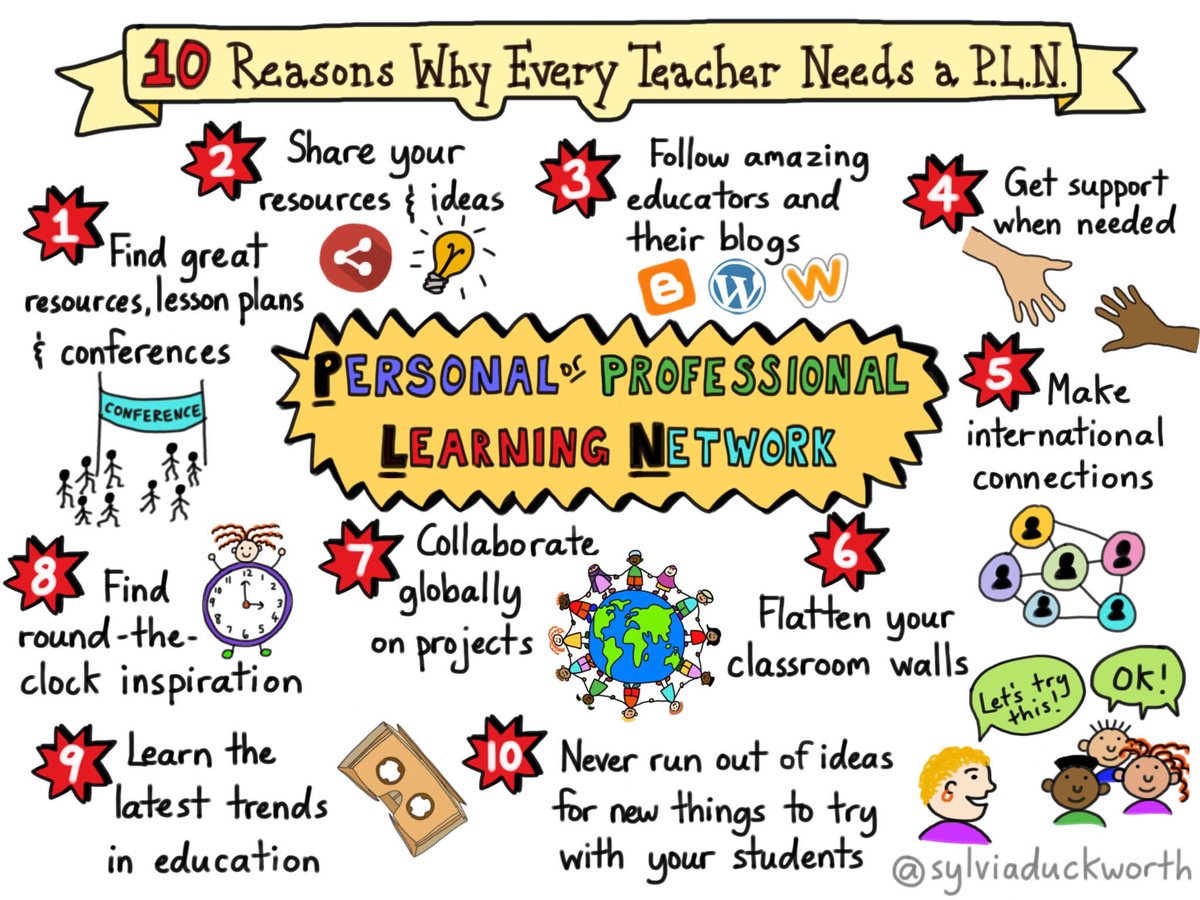
On PLNs and small victories

I like small victories. Today I had one because of my PLN (Professional Learning Network). One of my regular reads is Matt Bergman's Learn Lead Grow blog. I follow him through Google+. His post today was about a cool chrome extension to help those with dyslexia better read their chrome browser.

After reading his blog, I went right to the support services team at school and shared this chrome tool and then showed them how to access it themselves via chrome extensions. A cool side benefit is that I also showed these folks the cool world of Chrome add-ons and extensions. Because of Matt's blog and my PLN, the learning and reading specialist, the head of support services, and the ESL teacher all now can share with their students this effective tool. I was pleased to hear the reading specialist explain to me why she thinks the extension is a useful tool for those who have dyslexia.

Yesterday, AJ Juliani shared his reading list. Though my list is not as vast as his, here are some of the people and sites that I read almost daily.

  1. AJ Juliani - A great big-picture and inspirational tech though leader. For AJ, it is always about the bigger questions. It isn't really about the tech, it is about what tech allows us to do. 
  2. Learn, Lead, Grow - Matt Bergman is a thoughtful tech innovator. 
  3. Jordan Shapiro at Forbes magazine always offers provocative articles about education and education policy. 
  4. +Alice Keeler- a true Google guru. What doesn't she know how to do? I can't keep up with her output. But she is amazing. 
  5. Finally, I check out this Education Technology and Mobile Learning blog for its broad array of tips and tools.  
This list is not exhaustive. I also contribute to and read Google+ posts. +Kyle Beatty and +Dan Crowley are terrific aggregators of fascinating tech and ed-tech information. Their commentaries on are always interesting and well considered. I tweet and receive a steady stream of education and ed-tech tweets as well. These are crucial components of my PLN.
https://pbs.twimg.com/media/CkswcFeW0AAGg1Y.jpg
Important people who used to be part of my PLN

I don't read him too much anymore, but Will Richardson helped me connect technology to my already very progressive pedagogy. Before Will, I thought tech useful, but didn't really see its potential transformative power. His blog that I used to read no longer exists. Currently, I follow him on Medium and am happy when his work pops up on that aptly named medium. 

Lea Hansen was likely my first daily read. I don't check her out much anymore, but her classroom blog was a tremendous inspiration to me back when I was a social studies teacher five and six years ago. 

I also found Jennifer Ward's work to be amazing. She barely posts anymore, but thanks Jennifer. You taught me a lot. 

I also read quite a few history teaching sites that I don't list here. Though they are tech related, they are less germane to this general ed-tech blog. Unlike the folks I list above, I don't read them daily. They are bookmarked sites I visit frequently, but they aren't part of my PLN.

To my about 50 or so daily readers (and thanks so much to all of you!) I am sure that I am preaching to the choir in saying get a PLN. If you somehow have come across me, surely some of the names I mention above are already very familiar to you. If not, I hope you find them as interesting as I do. 

I love my PLN. I almost wish the unwieldy immersion into learning it offers could be accredited because I've learned more from it than I did through my Master's degree. I learned something today that wasn't earth-shattering. But I made three teachers very excited today and their new knowledge will directly benefit students right away. Without my PLN, this small victory would not have happened.

Please retweet this along with your favorite reads.


Featured Post

Prezi Video

 Remember Prezi? Once upon a time it was all rage for students. I see very few students use this tool any longer. Prezi is back, though, wit...