Tuesday, February 25, 2020

My school is lucky enough to have 12 and soon to be 16 Lenovo Daydream VR headsets. I have used them in my teaching to make a learning come more alive. I'm thrilled to report that other teachers have joined me. I recently worked with a colleague for two days of Virtual Reality in Spanish class. It took some time to prepare; it took a good amount of work. But she was so excited by the results that she plans to bring her students back in a month to "tour" Machu Picchu. I asked her about her thoughts on the experience. She shares her reflections below:
The VR component of my "Reconquista" curriculum was the highlight of the unit.  My students had been studying (in very broad strokes) the history of the Iberian Peninsula from the collapse of the Roman Empire (~400CE) to the defeat of the Moors in Granada in 1492.  In the south of Spain, in particular, the complicated history involving Romans, Visigoths, Moors, and Christians can be seen, concretely, in much of the architecture.  The Cathedral / Mosque of Córdoba is perhaps the most dramatic example.  By taking a VR tour of the complex, the kids were able to see how incredible the space is, and how the history of all the people who worshipped there over the centuries is reflected in the architecture and in the materials from which it was built.  The oldest part of the mosque was constructed in the 8th century using columns that the Moors "recycled / reused" from the Roman temples and amphitheaters that had been there earlier.  As the Córdoba Caliphate grew in population and importance, the mosque was expanded three times and became one of the most important and largest mosques in the world.  But in 1236, the Christians recaptured Córdoba and consecrated the mosque so that it could function as a Catholic cathedral.  Not long after, they decided to tear down the middle of the mosque in order to build a gothic cathedral right in the middle of the floor plan.  What the kids were able to explore in the VR tour is a remarkable combination of these architectural styles and materials.
I created a map for them of the interior, and assigned them, in pairs, to "find" five different items in the complex.
On the first of two days in the tech suite, speaking only in Spanish, the students had to take turns wearing the VR headset and navigate the space in order to find the items.
On the second day, I had the pairs return to two places: the Mihrab and the high altar.  Then they had to write a paragraph in Spanish comparing and contrasting colors, the materials, the important features of those spaces.


Here's what they saw, only it was 100 times better in VR.

https://blogs.friendscentral.org/help/files/2020/02/20200214_073615.mp4?_=1  

Sunday, February 9, 2020

14th and 16th Century works augmented through 21st Century Technology


I still have the daily newspaper delivered to my front door. I like text on paper.

Yet, as an educator, I am surprised by my field's almost complete lack of engagement with technology. Perhaps I shouldn't be. After all..

"Centuries of text‐based scholarship and the primacy of the press created the context within which print culture became naturalized."

from the Digital Humanities Manifesto
  
Change isn't happening as quickly as predicted. 

The Kindle hasn't replaced books. (That's a good thing.) 
Many magazines still enjoy healthy circulations. (So is that.) 
Computers in the hands of every student has not significantly changed education at any level, despite Papert's plea from 20 years ago.   (This is troubling.) 

Even the Manifesto which I quote above is almost 10 years old. Still, it argues:

Needless to say, we are NOT arguing for the abolition of books; on the contrary, we are advocating for a neo‐ or post‐print model where print becomes embedded within a multiplicity of media practices and forms of knowledge production.  It is one in which architecture and design (again) become central features of how research questions get formulated as well as communicated, shaped, and styled. This is an incredibly exciting moment in which determining and designing  the interface to information, data, and knowledge becomes just as central as the crafts of writing, curating, and coordinating. "    

Interdisciplinarity and multidisciplinarity are empty words unless they imply changes in language, practice, method, and output. Yet we in education sit in our silos and rarely do those in the humanities or social sciences think about publishing beyond the paper or across our disciplines. 

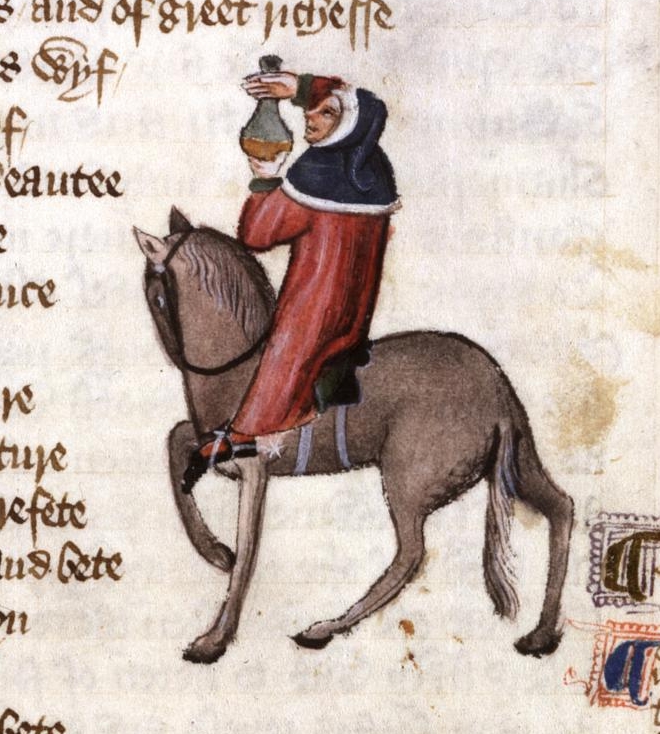
Yet, there are sometimes glimmers of the possible. I have recently come across two amazing examples of digital humanities in which traditional content, Hamlet and the Canterbury Tales (can't get more traditional than these) are shared via fundamentally new interfaces. The way this content is styled allows for the viewer and reader to interact with these classics in startling new ways.

The Canterbury Tales? Chaucer's 14th Century classic ? Yep, there's now an app for that. And it's amazing. and it is a great example of embedding print "within a multiplicity of media" to enhance understanding.

VR is another medium that shows great promise. Thus far, it seems that the military and gaming industry is using it more than anyone. Artists, scholars and writers really haven't figured out what to do with it yet. I look at a lot of VR so I can filter the junk and share the best with the teachers with whom I work. And much of it isn't very good. So, I was thrilled to discover this 360 performance of Hamlet. Go grab a Google Cardboard headset or if you have the money, get a better one to watch it. You haven't really seen anything like this before.  Here's what the Grey Lady had to say about it. 

Both of these are stunning. Check them out! And let's think more about teaching kids how to begin to do this. It will be sloppy and messy. We have no clear understanding of how to grade such work. It takes us far out of our comfort level and area of expertise. 

But wouldn't it be fun? 

Monday, December 16, 2019

There’s something about a well-done multi-media presentation that is greater than the sum of its parts.
This amazing map of the floods of 2019 along the Mississippi is a terrific example. I make no claim to produce anything so amazing, but one of my favorite digital tools- a real go-to tool for me- is Adobe Spark Page. I made sparkpage embedded below for my history students. It originally was just a google doc. But in about 40 minutes I was able to make this. To me, it is more engaging than a Google doc and I expect it is for students also. 


War of 1812

Thursday, October 31, 2019

Using Padlet to "Tweet" in the Classroom

For several year, I have had students in my International Relations class "live" tweet the Cuban Missile Crisis over the course of its 13 days. I have done this assignment on Twitter for the past three years. And I liked doing it on Twitter. But Twitter had its hassles. I wasn't comfortable with insisting that students sign up for a social media account to do an assignment. And ironically, a I had a bigger problems with the students who already had accounts because I was asking them to assume the personal of an important person from the crisis. Within Twitter, setting this up was hard if students already had an account.

This year, I decided to make a Padlet Wall to do the same thing. Look, I gave up the look and feel of Twitter when I moved this project from Twitter.  It would really look good. Here's a screenshot.


But Padlet was far easier to set up. We simply logged in with Google credentials, temporarily changed our names in the settings to the name of the assigned character and then "tweeted" away.
Take a look. I was pleased by the results.

Made with Padlet

Featured Post

Prezi Video

 Remember Prezi? Once upon a time it was all rage for students. I see very few students use this tool any longer. Prezi is back, though, wit...